When people think about improving their household water, they usually start with the kitchen sink. A filter pitcher or an under-sink purification unit seems like a sensible purchase, particularly when drinking water has an unpleasant taste. But what about the water flowing through the rest of the house?
Your washing machine, shower, dishwasher, and bathroom faucets all depend on the same incoming supply. If that water contains excessive sediment or other unwanted substances, the effects can extend well beyond the kitchen.
Treating water before it travels through your household plumbing offers a practical alternative. It’s a way of addressing certain problems early rather than dealing with their consequences in every room.
Why Treating Water Before It Reaches Your Faucets Makes Sense
Water can collect suspended particles and dissolved substances as it moves through natural environments and distribution networks. Even the condition of local infrastructure can influence what eventually reaches your property.
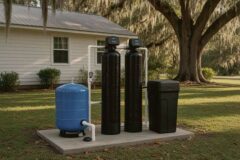
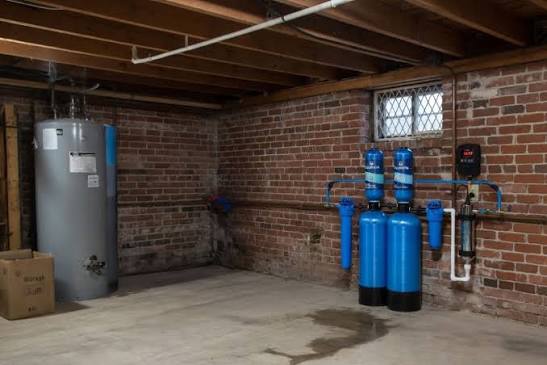
Installing water treatment at the point of entry allows homeowners to address specific water quality concerns before incoming water reaches connected fixtures and appliances.
Unlike individual faucet filters, centralized treatment equipment serves multiple areas of the property. Depending on its design, it can help reduce suspended particles, chlorine-related odors, and certain unwanted substances.
The biggest advantage is convenience. Instead of installing separate devices in several rooms, homeowners can manage treatment through one central location.
Of course, the equipment needs to match the actual water conditions. There’s little point in installing technology that addresses problems your household doesn’t have.
Understanding the Role of Sediment Removal
Have you ever unscrewed a faucet aerator and discovered tiny particles trapped inside? Perhaps you’ve noticed a little grit settling at the bottom of a glass.
These particles may originate from groundwater, aging pipes, or disturbances within the distribution system.
Incorporating sediment pre-filtration into a household treatment arrangement helps capture suspended material before water reaches subsequent filtration stages.
This initial barrier can help reduce the amount of debris entering carbon filters and other treatment components. It may also limit particle accumulation within connected plumbing fixtures.
Sediment filters come with different micron ratings, which indicate the particle sizes they’re designed to capture. Selecting an excessively fine filter, however, may cause unnecessary pressure restrictions or frequent cartridge replacements.
Getting that balance right matters, especially in homes with substantial daily water consumption.
How Multiple Treatment Stages Work Together
There’s no single filtration material that addresses every possible water quality concern. That’s why some centralized systems combine several treatment methods.
An initial sediment filter captures suspended particles. Activated carbon may then reduce chlorine and certain unwanted tastes, odors, or organic compounds.
If excessive water hardness is another concern, a separate softening unit can help reduce calcium and magnesium concentrations.
Each stage has a distinct responsibility. Think of it as a small team working together rather than expecting one component to handle everything.
However, more stages don’t automatically translate into better water. The effectiveness of any treatment arrangement depends on its design, verified capabilities, and ongoing maintenance.
Choosing Filtration Equipment That Suits Your Household
Shopping for filtration equipment can feel slightly overwhelming. Different capacities, treatment technologies, and product descriptions make comparison difficult, particularly for first-time buyers.
When evaluating whole-home water filter systems, consider your property’s water test results, daily consumption, plumbing configuration, and peak flow requirements.
A household with multiple bathrooms may regularly use several fixtures simultaneously. The filtration equipment needs to accommodate those activities without significantly restricting water pressure.
Smaller properties may benefit from a more compact arrangement with lower installation and maintenance expenses.
Ask about replacement filter availability, treatment capacity, and independent performance certifications before making a decision.
A dependable system that meets your everyday requirements is generally a better investment than an elaborate setup with features you’ll rarely need.
The Benefits Extend Beyond Drinking Water
Some of the most noticeable advantages of centralized filtration become apparent during ordinary household activities.
Appropriate carbon treatment may reduce unpleasant disinfectant odors during showers. Sediment removal can help limit particles collecting around faucet aerators and certain appliance components.
When separate softening equipment is included, homeowners may also experience fewer mineral deposits around bathroom fixtures.
These improvements depend on the original water conditions and the technologies installed.
They might sound like small conveniences, but there’s real value in making household routines less frustrating. After all, nobody particularly enjoys cleaning clogged faucet screens or wondering why the bathwater looks unusual.
Don’t Overlook Installation and Maintenance Requirements
Even well-designed filtration equipment needs proper installation and occasional attention.
Before installation, consider available space, plumbing access, operating pressure, and future servicing requirements.
Sediment cartridges gradually collect debris, while carbon media eventually reaches its treatment capacity. Both require maintenance according to manufacturer recommendations and actual water conditions.
A noticeable decline in water pressure may indicate a clogged filter, although other plumbing problems can produce similar symptoms.
Keeping track of replacement dates and arranging periodic inspections can help maintain reliable performance.
It’s also worth remembering that centralized filtration doesn’t guarantee drinking water safety. Specific contaminants may require additional testing and targeted treatment.
A Practical Investment That Works Behind the Scenes
Improving household water quality doesn’t necessarily require an expensive collection of treatment devices. Sometimes, a carefully selected centralized system is all that’s needed to address several everyday concerns.
Start with reliable water testing, understand the findings, and choose equipment that fits your property and budget.
The beauty of a well-designed filtration arrangement is that it quietly goes about its job while you get on with yours. From morning showers to evening cooking, better-managed water quality can make ordinary household routines more comfortable, convenient, and enjoyable.