Water is one of those everyday things we rarely think about until something seems off. Maybe your tap water has an unusual taste, your kettle keeps collecting white mineral deposits, or you’ve started wondering what’s actually in the water your family drinks. Whatever the reason, it’s natural to look for a solution that makes water cleaner, fresher, and more pleasant to use.
For many households, reverse osmosis is worth considering. This treatment method can reduce a range of dissolved substances in drinking water, making it a popular choice for people who want an extra layer of filtration at home. Still, it isn’t a magic fix for every water problem. Understanding how it works, what it removes, and where it fits into your household can help you make a better decision.
What Makes Reverse Osmosis Different?
Traditional filters often use materials such as activated carbon to capture certain impurities and improve taste and smell. Reverse osmosis takes a different approach. It pushes water through a specialized semipermeable membrane that allows water molecules to pass while rejecting many dissolved substances.
The process is a little more involved than running water through a basic filter cartridge, but the principle is fairly straightforward. Pressure moves water across the membrane, while a portion of the dissolved material is carried away in a separate wastewater stream.
This is why reverse osmosis water filtration is commonly used when people want to reduce dissolved salts, certain metals, and other contaminants that ordinary carbon filters may not remove effectively. The exact results depend on the equipment, the condition of its membrane, and the quality of the incoming water.
It’s also important to remember that no single treatment method removes everything. The right system depends on what is actually present in your water, not simply on the number of filtration stages printed on a product box.
Why Water Quality Should Come First
Before buying equipment, take a closer look at your current water supply. Municipal water is generally treated and monitored, but its characteristics can vary by location. Private wells have different considerations because the owner is usually responsible for arranging appropriate testing.
Taste and appearance can offer clues, but they can’t reliably tell you whether water is safe. Water that looks clear may still contain contaminants, while cloudy water may result from relatively harmless sediment or trapped air. Testing gives you a more dependable starting point.
A laboratory analysis can identify concerns such as excessive dissolved minerals, nitrate, arsenic, lead, or other substances relevant to your location and water source. Not every household needs the same set of tests, so it makes sense to consult a qualified laboratory or local water professional about which ones are appropriate.
Once you understand the results, choosing a treatment system becomes much easier. Instead of paying for features you may not need, you can focus on the problems that actually matter.
Understanding the Benefits of RO Systems
One reason homeowners choose reverse osmosis systems is their ability to reduce many dissolved contaminants in drinking water. Depending on the model and its certification, an RO unit may help reduce substances such as lead, arsenic, nitrate, fluoride, and total dissolved solids.
That doesn’t mean every product performs equally well. Reduction claims should be checked against independent certifications and the manufacturer’s documentation. A system designed to reduce one contaminant might not be certified to reduce another.
Taste is another common reason people consider RO. Water with high levels of certain dissolved minerals can have a salty, bitter, or otherwise unpleasant flavor. Reducing those substances may make drinking water more appealing, which can be especially useful for households that prefer the taste of bottled water but would rather produce drinking water at home.
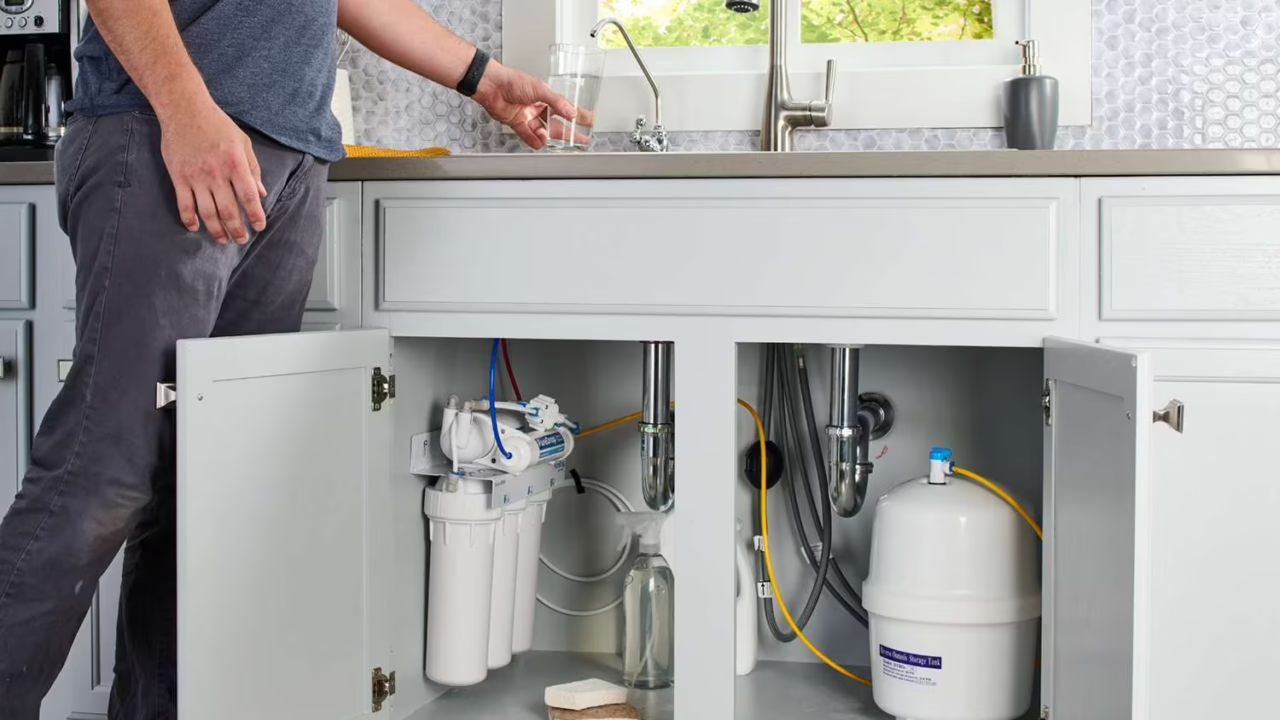
Many residential units are installed beneath the kitchen sink and supply a separate drinking-water tap. Others connect to refrigerators or include a storage tank. The best configuration depends on available space, household water use, and whether you want filtered water for drinking, cooking, or both.
Is Reverse Osmosis the Right Choice for Every Home?
Not necessarily. Reverse osmosis is useful, but it isn’t always the most practical first step.
If your main problem is hard water, for example, a water softener may be more suitable for protecting plumbing fixtures, improving soap performance, and reducing scale buildup. RO units can reduce some minerals in drinking water, but an under-sink system won’t solve hard-water problems throughout the house.
Similarly, if the concern is microbial contamination, the answer depends on the source and the specific risks involved. Reverse osmosis can reduce certain microorganisms when the complete system is appropriately designed and maintained, but it shouldn’t automatically be treated as a stand-alone solution for unsafe well water. Disinfection or other treatment may be necessary.
A carbon filter could be enough if the primary goal is improving chlorine taste and odor in otherwise suitable drinking water. In some cases, combining technologies delivers better results than relying on one system to handle every issue.
The goal isn’t to buy the most complicated equipment available. It’s to match the treatment method to the water.
What to Look for When Comparing Systems
Shopping for a filtration unit can get confusing quickly. Product descriptions often highlight the number of stages, special cartridges, or impressive-sounding features. Those details can be useful, but they shouldn’t be the only things guiding your decision.
Start with certification. Look for independent verification of the specific contaminant-reduction claims that matter to you. Standards such as NSF/ANSI 58 are associated with reverse osmosis drinking-water treatment systems, while other standards cover particular materials or contaminant-reduction claims. Check the exact certification rather than assuming that a general label guarantees every possible benefit.
Next, consider the system’s daily capacity, water pressure requirements, replacement filter costs, and availability of compatible parts. A low purchase price may not represent good value if replacement cartridges are expensive or difficult to find.
Think about water waste, too. RO systems produce a stream of rejected water during operation. Newer models may use water more efficiently than older designs, but performance varies. Ask about the system’s recovery rate and wastewater ratio, especially if water conservation is important in your household.
Finally, make sure the unit fits your kitchen and your routine. A reliable system that is easy to maintain is usually a better choice than an elaborate one that gets neglected.
Maintenance Matters More Than You Might Expect
Even a well-designed water filtration setup needs regular attention. Pre-filters capture sediment and other material before it reaches the membrane, while post-filters may improve the final taste. These components need replacing according to the manufacturer’s instructions and actual water conditions.
The membrane also has a service life, although replacement timing varies with incoming water quality, usage, and maintenance. Reduced output, changes in taste, or unusual odors can signal that the system needs inspection. They don’t always identify the exact problem, so avoid guessing when a proper check is available.
Sanitation is another part of responsible maintenance. Storage tanks, tubing, and connections should be handled according to the manufacturer’s guidance, particularly when filters are replaced. Keep a simple record of service dates and use compatible replacement parts.
If your household relies on a private well, periodic water testing remains important even after installing a treatment system. Treatment equipment can reduce specific contaminants, but it doesn’t remove the need to monitor the source.
A Practical Way to Make Your Decision
The best approach is to start with evidence, compare suitable options, and think beyond the initial purchase price. Test your water, identify the contaminants you want to reduce, and choose equipment with credible performance information. Then make sure you’ll be able to maintain it properly.
Reverse osmosis can be an excellent option for improving drinking water when it matches the needs of your home. For other situations, a carbon filter, softener, disinfection unit, or combination of treatments may make more sense.
Clean, good-tasting water shouldn’t require guesswork. With a little research and a realistic understanding of what each system can do, you can choose a solution that fits your household, supports everyday comfort, and continues working well long after installation.