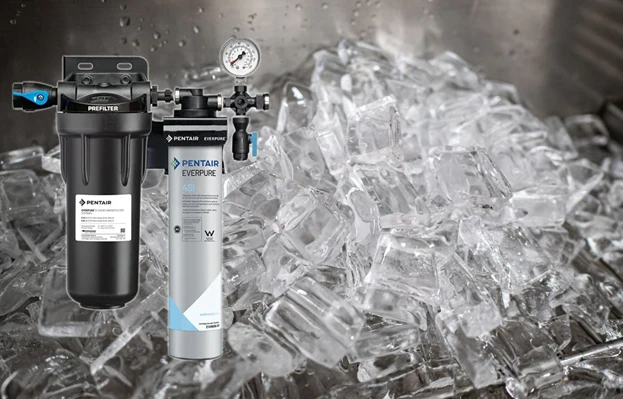
Ice is one of those things people rarely think about until it doesn’t look, taste, or perform the way it should. In a restaurant, hotel, café, healthcare facility, or catering business, though, ice is part of the daily operation. It’s served directly to customers, used in beverages, and produced by machines that depend heavily on the quality of incoming water.
That makes water filtration more than a simple equipment accessory. The right filtration setup can help manage certain water-quality concerns, support ice machine performance, and make routine maintenance a little less troublesome.
Why Water Quality Matters for Ice Machines
Commercial ice machines process a considerable amount of water over their working lives. Every cycle brings fresh water into contact with internal components, filters, and ice-making surfaces.
If the incoming water contains excessive minerals, particles, or other substances, some of those characteristics can eventually affect the machine. Hardness may contribute to scale, while suspended particles can collect in components or affect the appearance of ice.
The quality of the finished ice matters, too. Ice is consumed directly, so unusual taste, odor, or cloudiness isn’t something a business wants customers noticing.
Understanding Commercial Ice Machine Filtration Systems
The purpose of commercial ice machine filtration systems is to treat incoming water before it reaches the ice-making equipment. The exact filtration method depends on the source water and the concerns identified through testing.
Some systems are designed to reduce sediment, while others target certain chemicals, tastes, odors, or minerals. Multi-stage filtration can combine different approaches when the water requires more than one type of treatment.
The important thing is compatibility. A filter shouldn’t simply be selected because it has a long list of features. It needs to be suitable for the ice machine, water flow requirements, and actual water conditions.
The Problem With Sediment
Water can carry tiny particles that aren’t always visible in a glass. Sediment may come from the water source, plumbing, or changes within the supply system.
When these particles enter an ice machine, they can potentially collect in filters, valves, and other components. Over time, that can contribute to maintenance issues or affect water flow.
A properly selected sediment filter can help capture suspended particles before they reach the machine. However, filtration performance depends on factors such as particle size, concentration, and filter specifications.
That’s why choosing the right micron rating and filter type matters.
How Chlorine Can Affect Taste and Odor
Municipal water is commonly disinfected to help protect public health. Chlorine is one substance that may be used during this process.
While disinfection is important, some businesses notice a chlorine taste or odor in their water. When that water is turned into ice, those characteristics can sometimes become more noticeable because ice is used directly in drinks.
Chlorine reduction is therefore one reason some commercial operations consider carbon-based filtration. The appropriate filter depends on the local water supply and whether chlorine or related disinfectants are actually present.
Testing the water first is always a better approach than assuming a particular contaminant is responsible.
Reducing Mineral Scale Inside the Machine
Hard water contains minerals such as calcium and magnesium. When water is repeatedly heated, cooled, or evaporated, these minerals can form deposits on equipment surfaces.
Inside an ice machine, scale can affect components and create additional cleaning requirements. It may also interfere with normal operation if buildup becomes significant.
Filtration can help with some mineral-related concerns, but not every filter is designed to reduce hardness. In certain situations, a separate softening or specialized treatment system may be more appropriate.
The right solution depends entirely on the water chemistry and equipment requirements.
Protecting Equipment Through Regular Maintenance
Even the best filtration system doesn’t eliminate the need for routine maintenance. Commercial ice machines should be cleaned and sanitized according to manufacturer recommendations and applicable health requirements.
Filters also need to be replaced on schedule. A filter that has reached its capacity may not perform as intended, and delaying replacement can defeat the purpose of having filtration in the first place.
Businesses should keep simple maintenance records. Note filter-change dates, cleaning schedules, and any unusual changes in ice production or quality.
It takes only a few minutes, but those records can be extremely helpful when troubleshooting.
Don’t Choose a Filter Based Only on Price
The cheapest filter isn’t necessarily the most economical choice. Commercial equipment has specific flow rates, capacity requirements, and maintenance needs.
A filter that becomes exhausted quickly may cost more over time because of frequent replacement. On the other hand, an unnecessarily expensive system may provide features the business doesn’t actually need.
Look at the total picture: purchase price, replacement frequency, installation, maintenance, water usage, and expected performance.
A properly matched filter is usually a better investment than simply choosing the most expensive or cheapest option.
Water Testing Makes the Decision Easier
Before purchasing filtration equipment, businesses should consider having their water tested. Testing can identify hardness, sediment, disinfectants, dissolved solids, and other characteristics that may influence filtration choices.
This information helps prevent guesswork. If sediment is the problem, you can focus on sediment reduction. If taste and odor are the concern, another filtration approach may be more appropriate.
For larger commercial facilities, testing can also provide a baseline that can be compared with future results.
A Cleaner Approach to Commercial Ice Production
Good ice quality starts with good water management. A commercial ice machine doesn’t operate in isolation; its performance is closely connected to the water flowing into it.
The best approach is fairly simple: understand the incoming water, choose filtration that matches the actual conditions, follow the manufacturer’s requirements, and stay consistent with maintenance.
There isn’t one perfect filter for every business. A café, hotel, restaurant, and healthcare facility may all have different needs.
But when filtration is properly selected and maintained, it can become a quiet part of the operation that simply works in the background. And for a busy business, that’s exactly what you want — clean, dependable ice without turning water quality into another daily headache.