Osaka is the more relaxed, more food-obsessed counterpoint to Tokyo’s polished intensity. For Singaporeans on a second or third Japan trip — or first-timers who’d rather skip the bigger crowds of Tokyo — Osaka delivers a more colloquial Japan: louder, friendlier, with an eating culture that’s openly the city’s main attraction. Plus the proximity to Kyoto and Nara puts traditional Japan within an hour’s reach.
Sorting Japan travel deals Traveloka early lets you pick the right airport (Kansai International) and the right base district, which makes the cultural triangle — Osaka, Kyoto, Nara — significantly easier to navigate.
Where to Stay
Namba (Dotonbori district) for the energy and food. Umeda for the more business-friendly base near the major train hub. Tennoji for the quieter, more residential vibe with the temple within walking distance. Most first-time visitors gravitate to Namba — it’s the right call.
The Food Streets
Dotonbori is the famous neon-lit canal-side strip. Try takoyaki at Takoyaki Wanaka, okonomiyaki at Mizuno, kushikatsu in the Shinsekai district. Kuromon Ichiba Market for breakfast — sashimi, grilled scallops, fresh fruit. Osaka rewards travellers who eat constantly and small.
Osaka Castle
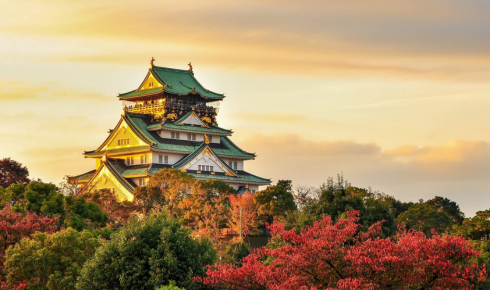
The reconstructed castle is impressive from outside; the museum inside covers Hideyoshi Toyotomi’s history. The surrounding park is worth a walking circuit, especially during cherry blossom season when the path becomes one of the prettier walks in Japan.
Day Trip: Kyoto
30 minutes by train. Fushimi Inari (the orange torii gate path), Kinkaku-ji (the gold pavilion), and Arashiyama (bamboo grove) form the postcard triangle. A single day is enough for the highlights but not the depth; an overnight stay gives more breathing room.
Day Trip: Nara
45 minutes by train. The deer park, Todai-ji temple with the giant Buddha statue, and the surrounding small streets. Half a day is plenty. Combine with a half-day in central Kyoto for a single Kyoto-Nara day-trip.
When to Visit
Late March to early April for cherry blossoms is peak. Mid-November for autumn foliage is the alternative. Both are crowded but visually spectacular. Summer is hot and humid; winter is cold but very photogenic for the temples.
Getting Around
Subway covers central Osaka well. JR Pass is useful if you’re doing Kyoto, Nara, and possibly Himeji or Kobe in the same trip. ICOCA card covers everything for travellers staying within the Kansai region.
Final Word
Three days in Osaka itself, plus 2-3 day trip days, is the right shape. The Singapore-Kansai direct flights are widely available. Pick midweek dates via Japan travel deals Traveloka for the best fares — Friday departures and Sunday returns from Osaka are notoriously expensive in peak seasons.
A Word on Eating Strategy
Osaka’s nickname is kuidaore — eat yourself bankrupt. The trick is portion management. Most travellers try to eat full meals at every famous stop and burn out by Day 2. Better strategy: small portions at multiple stalls. Takoyaki here, kushikatsu there, okonomiyaki later. Share dishes with travel companions. The eating experience is breadth, not depth. Save proper sit-down meals for one or two specific places where the experience is the point.